

Compliance
Read our compliance blogs for guidance on staying compliant with IRS guidelines for nonprofits and how to maintain tax-exempt status
- Date:
- Read time: 4 min
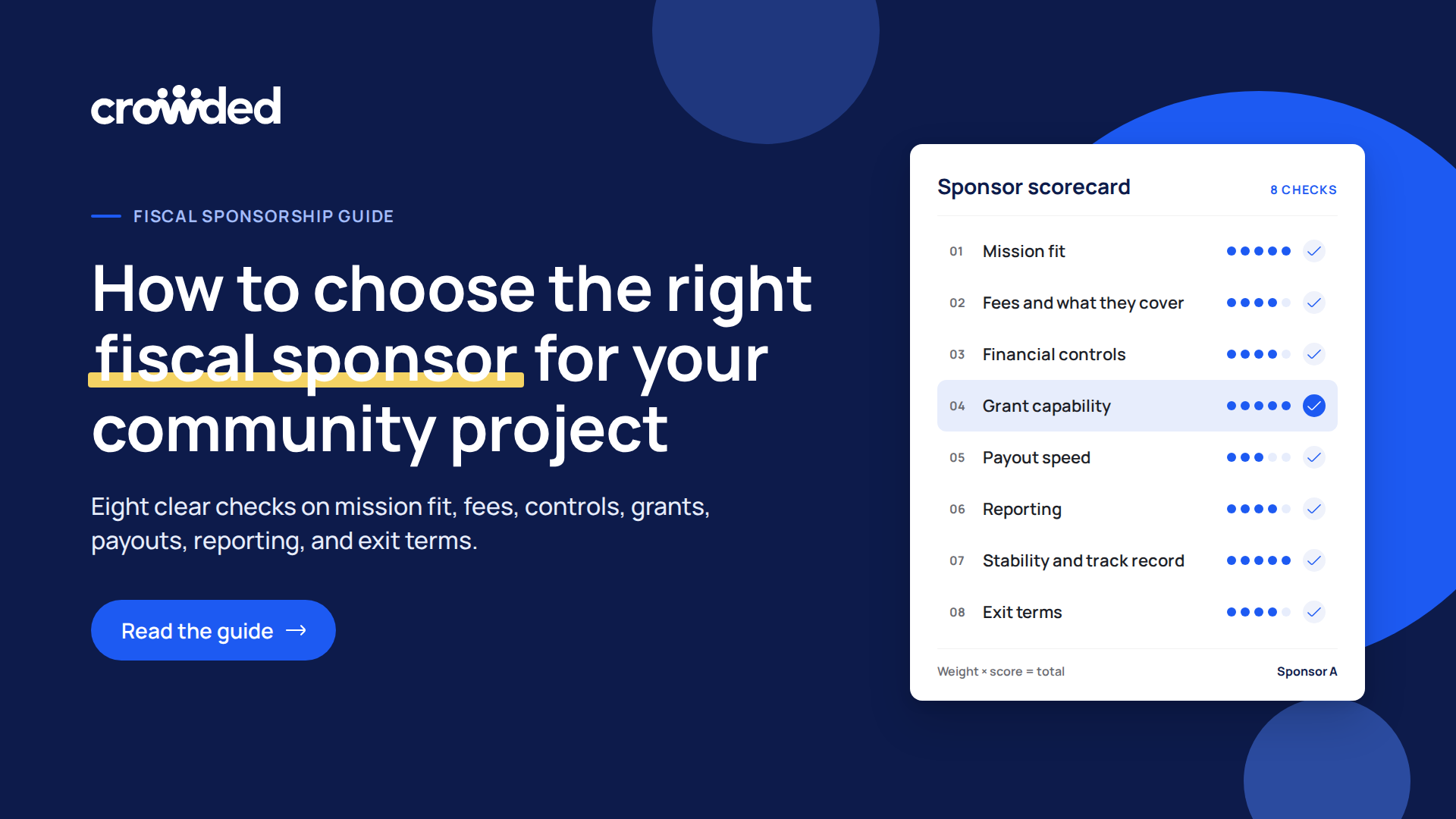
Choosing among fiscal sponsorship organizations is simple with eight clear checks on mission fit, fees, controls, grants, payouts, reporting, and exit terms. This guide shares 2023 fee data, a weighted scorecard, and what the 2026 fiscal sponsorship bill means for your community project.
- Date:
- Read time: 4 min
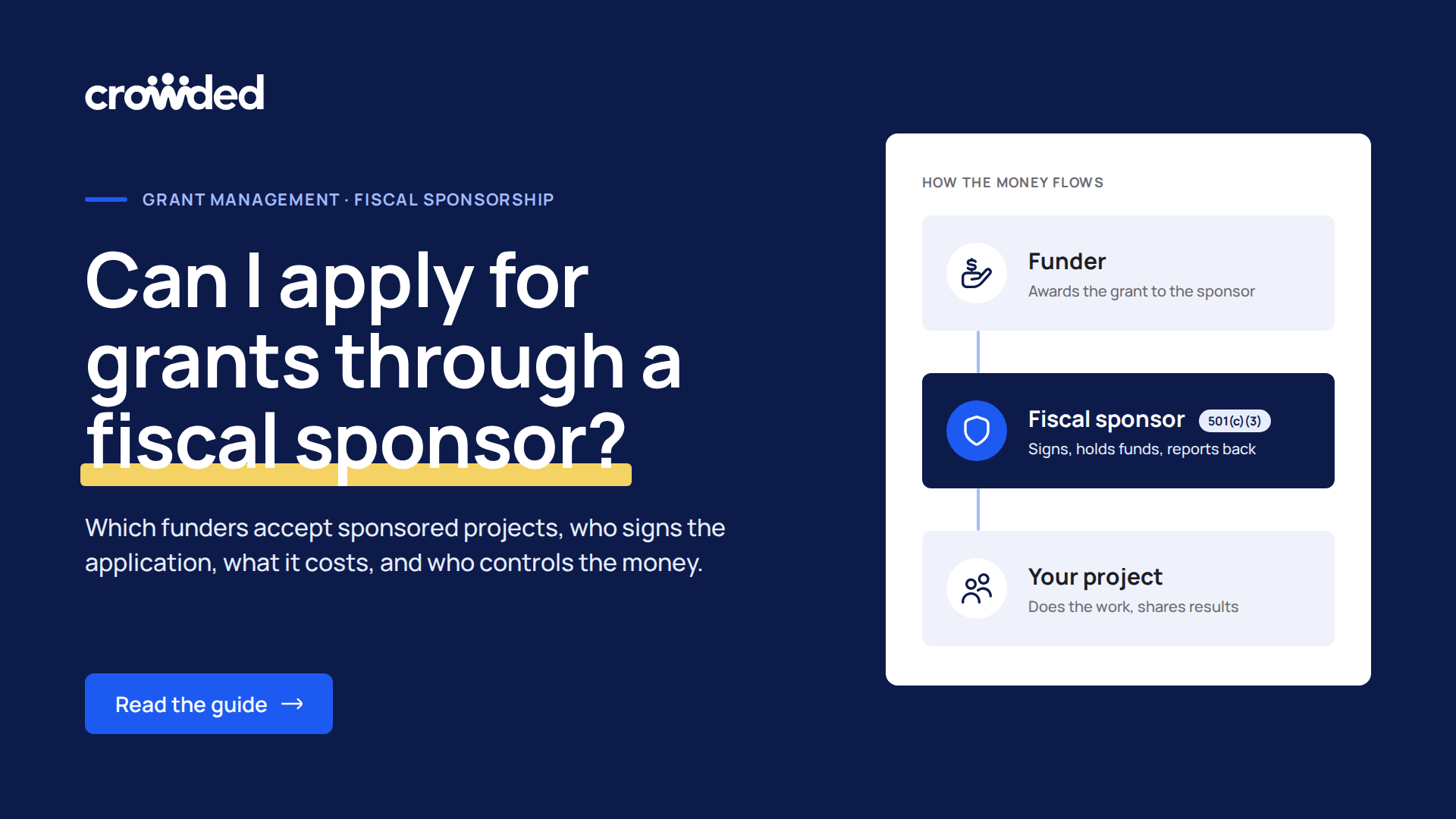
Fiscal sponsor grants open funding doors for projects that operate under an established 501(c)(3). This guide covers funder eligibility, the seven application steps, typical fees, and who manages the money after the award.
- Date:
- Read time: 4 min
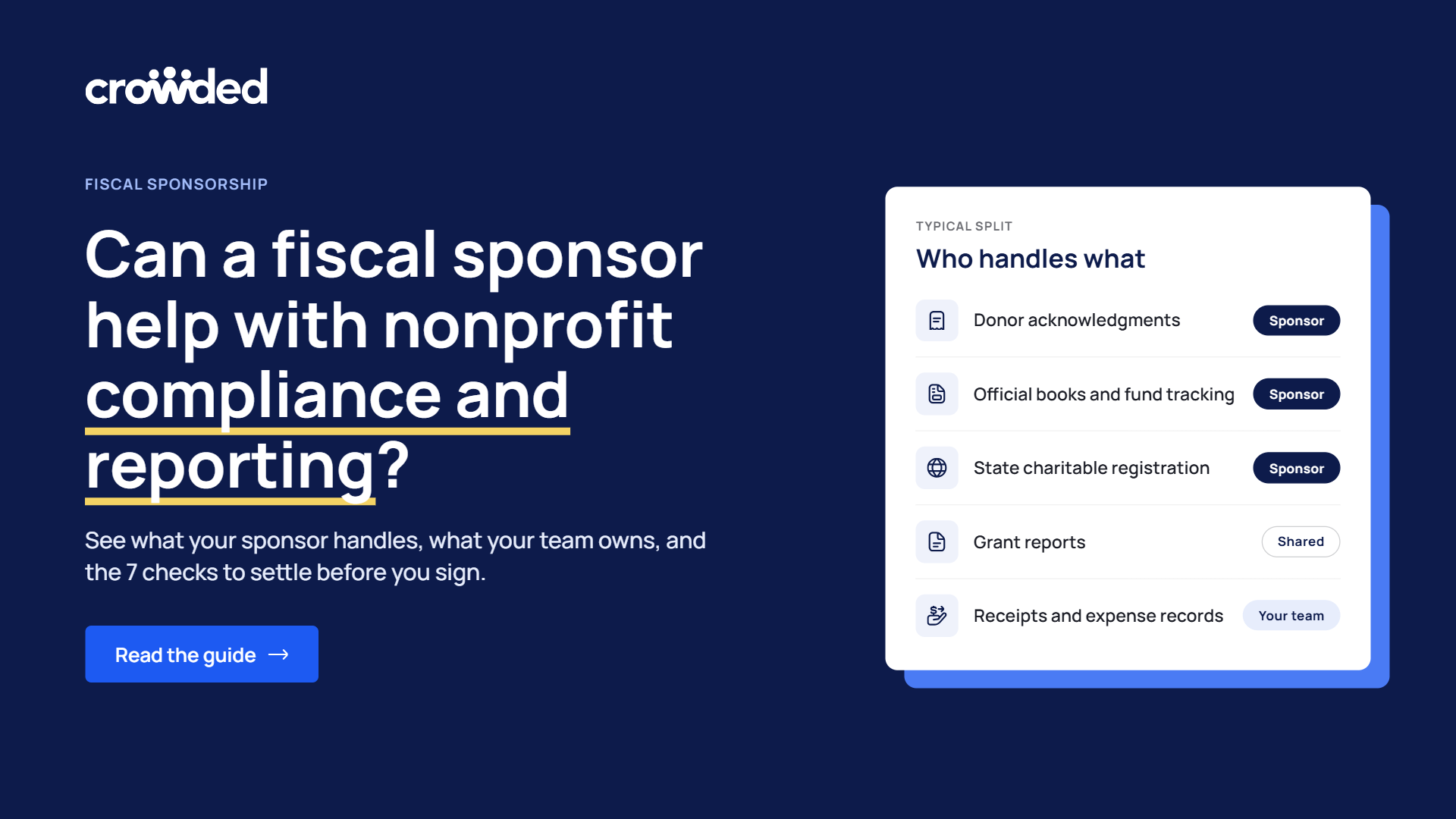
Fiscal sponsor compliance is a shared job: your sponsor files the Form 990, issues donor receipts and keeps the official books, and your team supplies the records behind every expense. This guide maps each task under Model A and Model C and lists seven checks to settle before you sign.
- Date:
- Read time: 4 min
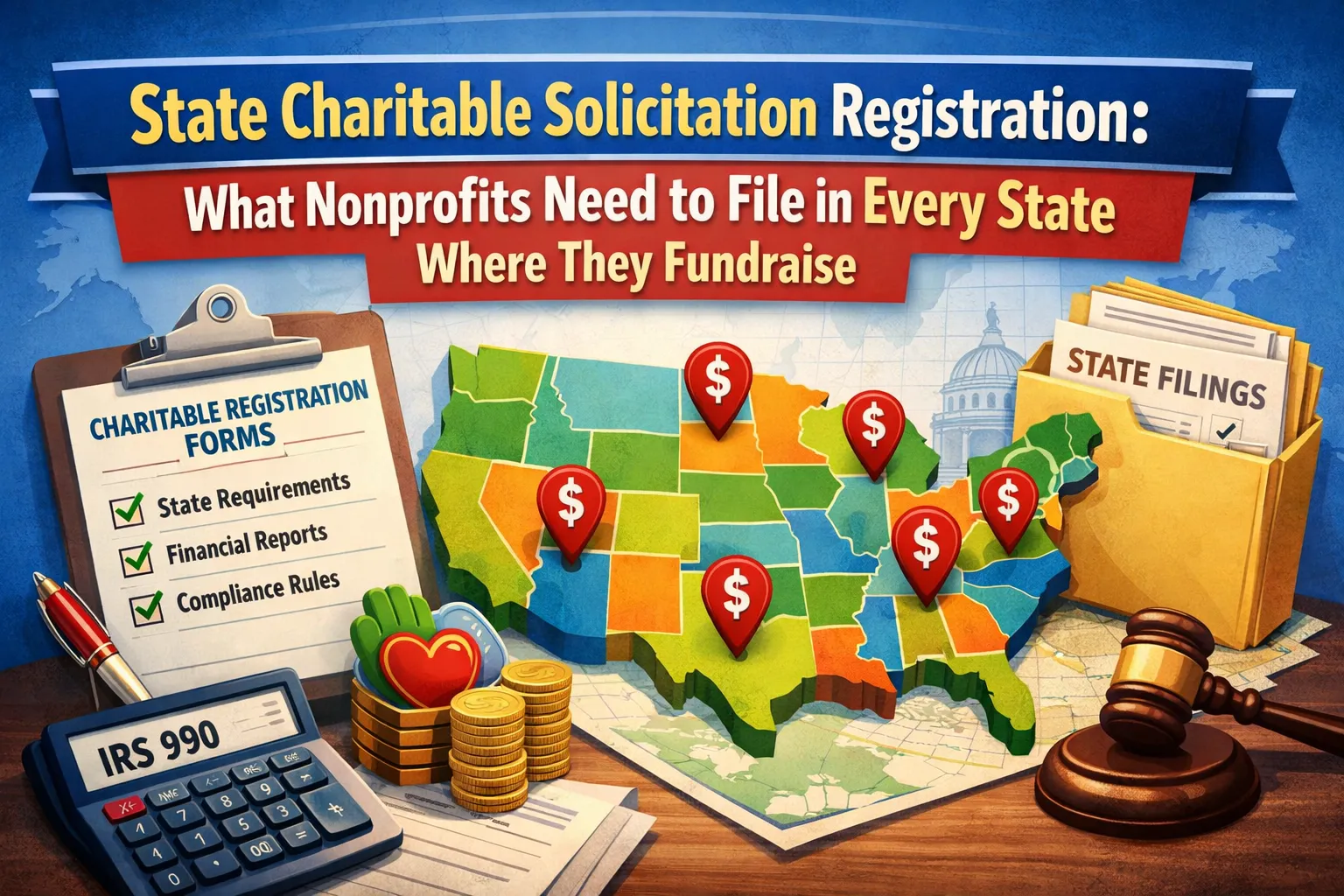
State charitable solicitation registration is the process by which nonprofits register with state agencies before soliciting donations from residents of those states. Many states require registration before fundraising begins, annual renewals, financial disclosures, and state-specific filings.
- Date:
- Read time: 4 min
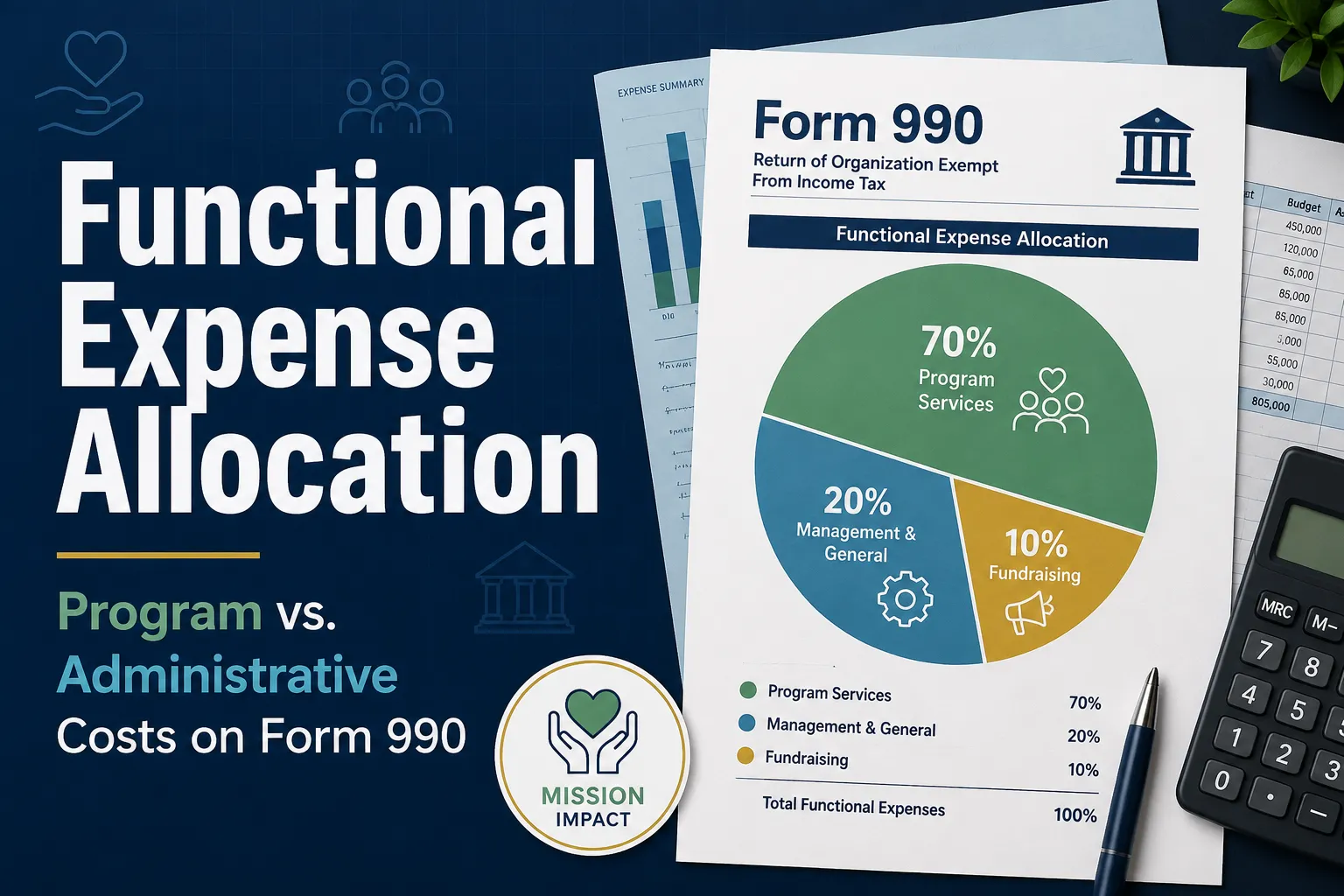
Functional Expense Allocation determines how nonprofits classify expenses across Program Services, Management & General, and Fundraising on Form 990 Part IX. Learn practical nonprofit expense allocation methods, common mistakes to avoid, and best practices for building a consistent, defensible allocation process.

- Date:
- Read time: 4 min
Fiscal sponsorship compliance responsibilities go far beyond accepting donations on behalf of a project. Learn what fiscal sponsors are legally and financially responsible for, how oversight differs across sponsorship models, and how organizations can maintain compliance across multiple sponsored initiatives.

- Date:
- Read time: 4 min
Starting as a new nonprofit CFO can feel overwhelming, especially when managing restricted funds, board expectations, grants, and financial controls. This practical 90-day playbook provides a step-by-step framework for building visibility, strengthening oversight, and creating a foundation for long-term nonprofit finance leadership.

- Date:
- Read time: 4 min
Chapter financial management becomes increasingly complex as organizations add chapters, bank accounts, treasurers, and reporting requirements. This guide explains the framework, controls, and oversight practices needed to build a scalable chapter financial management program that supports stronger governance and financial visibility.

- Date:
- Read time: 4 min
Annual Form 990 filings show what happened in one year, but 10 years of Form 990 data reveal financial trajectory, chapter risk, and long-term sustainability. This guide explains how associations can use 990 trends, benchmarks, and real-time financial visibility to assess chapter financial health with more confidence.

- Date:
- Read time: 4 min
A board review of Form 990 helps nonprofit directors understand the financial, governance, and compliance disclosures that become part of the organization's public record. Learn what boards should review, common red flags to watch for, and how multi-chapter organizations can strengthen oversight before filing.