The 1023-EZ Eligibility Worksheet: What Multi-Chapter Leaders Must Monitor Over Time
Filing for tax-exempt status often feels like a milestone. For many nonprofit chapters and affiliates, the 1023-EZ eligibility worksheet reinforces that assumption. It looks like a simple checkpoint on the way to approval. Answer a few questions, submit the form, and move on.
That sense of finality is where risk begins.
For organizations that operate through chapters, affiliates, or local units, the eligibility worksheet is not a permanent certification. It is a snapshot of organizational structure at a single moment in time. As governance, finances, and oversight evolve, the assumptions behind that worksheet can quietly become inaccurate.
This guide explains what the 1023-EZ eligibility worksheet actually represents, why eligibility can change after filing, and what multi-chapter leaders must monitor over time to reduce compliance risk.
TL;DR
-
The 1023-EZ eligibility worksheet reflects an organization’s structure at the time of filing, not forever.
-
Many chapters are eligible when they apply, but later become ineligible as oversight, systems, or financial control change.
-
Eligibility depends less on revenue size and more on legal independence, financial control, and operational separation.
-
Centralized banking, shared systems, or HQ-level approval authority can invalidate earlier eligibility assumptions.
-
Eligibility issues rarely surface immediately; they often appear years later during audits, grant reviews, restructures, or Form 990 scrutiny.
-
For HQ leaders, monitoring eligibility is an ongoing governance responsibility, not a historical checkbox.
What the 1023-EZ Eligibility Worksheet Is (and What It Is Not)
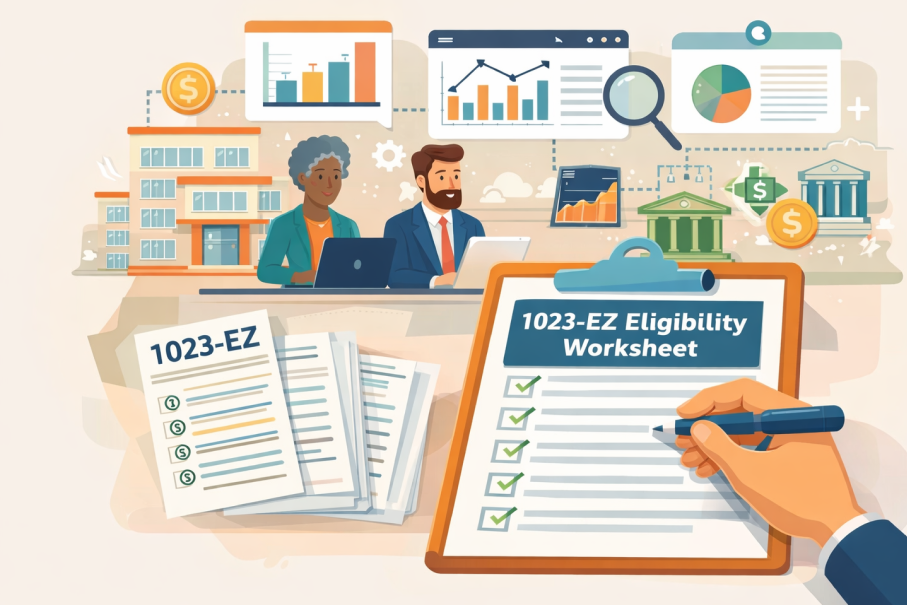
The 1023-EZ eligibility worksheet is a required self-assessment used to determine whether an organization qualifies to file Form 1023-EZ instead of the long-form Form 1023.
The worksheet is not submitted to the IRS. However, the IRS fully expects that:
-
It was completed accurately at the time of filing, and
-
The organization continues to meet those conditions over time.
This second expectation is frequently misunderstood.
The worksheet is effectively a structural representation of how the organization operates — who controls finances, how programs are administered, and how independent the entity truly is. IRS approval does not freeze those assumptions in place.
When operations evolve and the worksheet no longer reflects reality, eligibility risk accumulates even if no one revisits the form.
Why 1023-EZ Eligibility Changes Over Time for Chapters
Most chapters that file using Form 1023-EZ are legitimately eligible at the time of application. Revenue is limited. Programs are local. Governance authority sits clearly at the chapter level.
Over time, organizations grow and mature. Central offices introduce:
-
Standardized financial systems
-
Shared banking or accounting infrastructure
-
National fundraising or grant administration
-
Central approval of budgets or spending
Each change is often implemented to improve oversight, reduce risk, or increase efficiency. Individually, none of these steps feel problematic.
Collectively, they can alter the structural assumptions behind the original eligibility worksheet.
The worksheet does not expire — but eligibility can.
What Actually Makes a Chapter Ineligible After Filing
Eligibility under Form 1023-EZ depends on how independence is demonstrated, not how it is described internally.
From an IRS perspective, independence is evaluated through facts such as:
-
Who controls bank accounts?
-
Who approves expenditures?
-
Where do funds flow before being spent?
-
Who has final authority over programs and contracts?
-
Whether governance authority is clearly local or centralized
Chapters may feel independent operationally while still failing the IRS’s structural tests.
Common Triggers of Eligibility Drift
Chapters often drift out of eligibility when:
-
Bank accounts are consolidated or centrally visible
-
Budgets require HQ approval
-
National teams administer grants or fundraising
-
Financial systems are standardized across chapters
-
Funds temporarily pass through chapter accounts before redistribution
These shifts are rarely malicious. They are usually invisible compliance changes driven by growth.
How Eligibility Drift Creates IRS and Governance Risk
The IRS does not reassess 1023-EZ eligibility annually. Instead, eligibility issues surface retroactively when scrutiny increases.
This commonly happens during:
-
Form 990 reviews
-
IRS audits
-
Grantor compliance checks
-
Leadership transitions
-
Mergers, dissolutions, or restructures
At that point, the IRS compares how the organization actually operates to what was represented in the eligibility worksheet. If the two no longer align, prior filings can come under question.
The issue is not intent. It is misalignment between structure and representation.
When Form 1023-EZ Fits, and When It No Longer Does
Form 1023-EZ works best when a chapter remains:
-
Clearly independent in governance
-
Financially self-controlled
-
Operationally distinct from the parent organization
Eligibility becomes fragile when:
-
Financial oversight shifts centrally
-
Accounts or EINs are shared
-
Governance authority becomes ambiguous
-
Programs or revenue expand beyond basic local activity
In these situations, the worksheet may still appear passable on paper, but the underlying structure no longer supports the original answers.
What Central Organizations Should Monitor Across Chapters
For multi-chapter organizations, eligibility oversight is an ongoing governance responsibility. HQ leaders should periodically review:
-
Which chapters control their own bank accounts and spending
-
Whether any chapter revenues or assets have materially increased
-
Where financial approvals occur (local vs central)
-
Whether chapters are using shared accounting, banking, or payment systems
-
Whether national fundraising or grant administration affects local funds
How Central Visibility Helps Prevent Eligibility Problems
Eligibility decisions are only as reliable as the systems behind them.
Organizations that maintain clear, centralized visibility into chapter-level finances and permissions are better positioned to:
-
Detect shifts in financial control
-
Spot structural changes early
-
Reassess filing strategy before risk accumulates
Rather than treating eligibility as a historical filing decision, strong oversight allows it to be monitored as a continuing condition.
Platforms like Crowded support this approach by giving HQ leaders real-time insight into chapter-level financial activity, account permissions, and fund flows — making it easier to understand when organizational structure is changing in ways that affect eligibility.
Final Takeaway
The 1023-EZ eligibility worksheet is intentionally simple. For organizations that operate through chapters, it rarely stays that way.
The greatest risk is not filing quickly. It is allowing organizational structure to evolve without revisiting the assumptions behind earlier filings.
Growth introduces complexity. Without visibility, that complexity becomes compliance risk. Periodic eligibility review — supported by clear financial and governance insight — is what protects organizations over time.
Your questions, answered.
Does IRS approval of Form 1023-EZ mean the worksheet answers were correct?
No. IRS approval does not validate the accuracy of the eligibility worksheet. It only confirms that the form was processed. If eligibility assumptions don’t hold up later, the organization remains responsible for any misalignment.
Is there a requirement to refile Form 1023 if a chapter outgrows 1023-EZ eligibility?
Not automatically. However, if a chapter’s structure no longer supports the eligibility criteria used to file Form 1023-EZ, the organization may need to consult counsel about corrective action, disclosures, or restructuring to address ongoing compliance risk.
How often should HQ leaders reassess chapter eligibility?
There is no IRS-mandated schedule, but eligibility should be reviewed whenever there are material changes to governance, financial oversight, fundraising structure, shared systems, or chapter growth. Many organizations review eligibility during major audits, restructures, or leadership transitions.
Can increased HQ oversight alone make a chapter ineligible for 1023-EZ?
Yes. Increased oversight that shifts financial or operational control to the central organization can affect eligibility, even if the change was implemented for risk management or efficiency reasons.
Do shared accounting platforms or payment processors affect eligibility?
They can. Shared platforms aren’t automatically disqualifying, but if they result in centralized control over funds, approvals, or reporting, they may undermine the independence assumptions used in the original worksheet.
What happens if a chapter was ineligible at filing but was approved anyway?
The risk doesn’t disappear. Issues typically surface later during audits, Form 990 reviews, grant due diligence, or restructuring. At that point, organizations may face questions about accuracy, disclosure, or corrective steps.
Does joining a group exemption later affect a chapter that is filed via 1023-EZ?
Yes. Becoming a subordinate under a group exemption changes the chapter’s status and relationship to the central organization. This should trigger a review of prior filings and future compliance obligations.
Are pass-through or temporarily held funds always counted as gross receipts?
Often, yes. If funds move through a chapter’s accounts or are controlled by the chapter, the IRS may consider them gross receipts, even if the chapter does not ultimately retain the funds.
Can governing documents be updated later to “fix” eligibility issues?
Updating documents can help align structure going forward, but it does not retroactively change how the organization operated in prior years. Documentation updates should be paired with a broader compliance review.
Is eligibility risk only an IRS issue, or does it affect grants and donors too?
It affects more than the IRS. Grantors, institutional funders, and partners often review organizational structure and compliance history. Eligibility inconsistencies can delay funding or raise governance concerns.
Who inside a central organization should own eligibility oversight?
Eligibility oversight typically sits across finance, legal/compliance, and executive leadership. It should not live solely with individual chapters, especially when systems and controls are centralized.