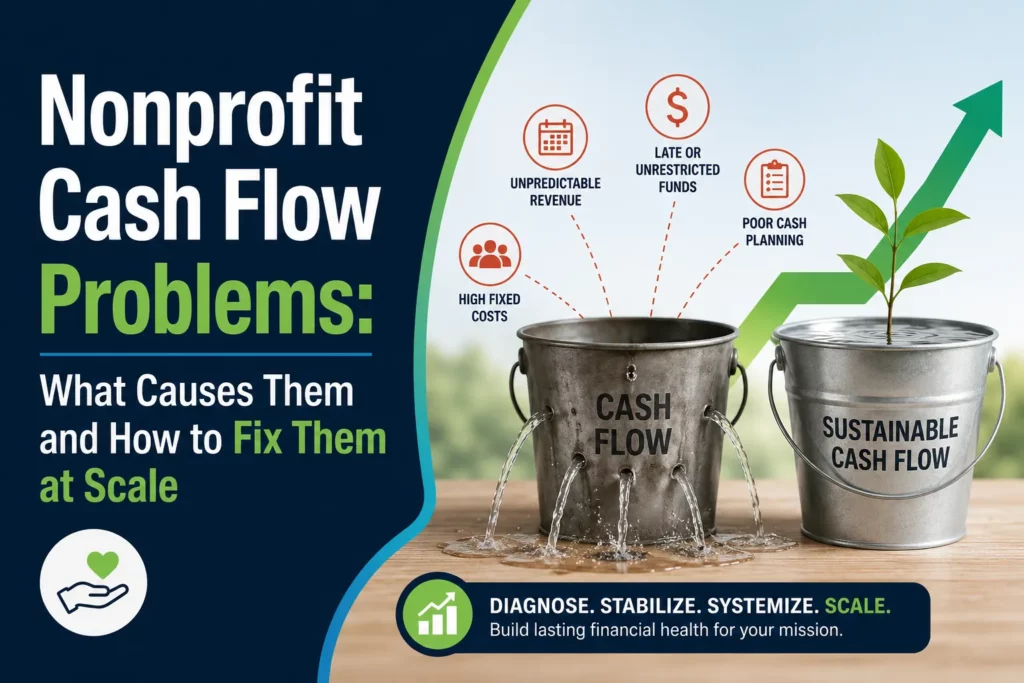
Nonprofit cash flow problems often look like funding shortages, but for multi-chapter organizations, the real issue is usually visibility. Cash may exist, but it is often spread across chapters, accounts, grants, programs, and restricted funds.
Leaders need to know where cash is, when it is available, who controls it, and whether risks are visible early enough to act. Strong cash flow management requires centralized oversight, timely reporting, liquidity planning, and financial controls across the organization.
TL;DR
- Nonprofit cash flow problems are often visibility problems. Cash may exist, but it may be restricted, delayed, or trapped across chapters, programs, and accounts.
- Grant reimbursement delays, lagging dues collection, and uneven chapter spending can create liquidity gaps even when the organization appears healthy on paper.
- Multi-chapter nonprofits need centralized cash visibility to understand where money sits, who controls it, and when it becomes available.
- Strong nonprofit cash flow management depends on forecasting, controls, and real-time chapter banking oversight that finance leaders can trust.
- Crowded helps associations, fraternities, sororities, and federated nonprofits centralize chapter accounts, monitor balances, and strengthen financial oversight at scale.
What Nonprofit Cash Flow Problems Actually Look Like at Scale
At scale, nonprofit cash flow problems often appear as timing gaps, trapped cash, delayed reporting, and uneven access to funds.
A multi-chapter nonprofit may have strong revenue and reserves, yet still struggle to pay vendors, reimburse staff, fund events, or support chapters on time. The issue is often liquidity distribution.
Cash may sit in local chapter accounts, grant reimbursements may arrive late, and national teams may lack real-time balance visibility. These challenges grow when finance teams manage money across multiple entities, locations, permissions, timelines, and reporting practices.
Common signs include:
- Chapters appear healthy individually, but national finance cannot see liquidity across the network.
- Consolidated reports show cash, but specific programs cannot access funds when needed.
- Grant-funded work begins before reimbursement cash arrives.
- Dues collection lags behind budget assumptions.
- Chapter spending spikes before events, renewals, or leadership transitions.
- Finance teams rely on spreadsheets, emails, and manual bank logins to understand cash position.
This is why nonprofit financial management at scale needs infrastructure.
The Four Most Common Causes of Nonprofit Cash Flow Problems
Most nonprofit cash flow problems at scale come from four operational causes: reimbursement timing, slow collections, uneven chapter spending, and limited cash visibility.
Grant Reimbursement Timing Creates Funding Gaps
Grant reimbursement delays can create serious cash flow issues for nonprofits.
Nonprofits often pay for payroll, programs, vendors, travel, and supplies before reimbursement arrives. When grants span multiple chapters or regions, tracking what is reimbursable, submitted, approved, or pending becomes harder.
The fix is timing visibility. Finance leaders need to know when expected grant revenue will become usable cash.
Membership Dues and Revenue Collection Lag
Nonprofit dues collection can create cash flow gaps for associations and membership organizations.
Dues may be budgeted before cash is collected. Members may renew late, chapters may hold funds locally, payment processors may delay settlement, and different systems may create inconsistent reporting.
Finance teams should track dues by due date, channel, chapter, member segment, and settlement status. The goal is to move from expected revenue to collected, visible, and available cash.
Uneven Chapter Spending Patterns
Chapter spending can spike during events, conferences, scholarships, programs, and officer transitions. For multi-chapter nonprofits, the issue is visibility. Activity may happen in separate accounts while the national office remains responsible for oversight.
Strong chapter oversight helps finance teams see balances, permissions, activity, and spending patterns before problems escalate.
Lack of Centralized Visibility Into Organizational Cash
The biggest cash flow risk is the one that leadership cannot see.
Many nonprofits have cash spread across chapters, programs, funds, and separate bank accounts, making liquidity management difficult. Without a centralized view, finance teams cannot see where cash is held, who controls it, or when it is available.
Real-time visibility helps leaders manage cash proactively rather than react after monthly reports.
How to Diagnose Cash Flow Problems Systematically
To diagnose nonprofit cash flow problems, finance leaders should separate revenue, timing, location, restriction, and control issues. Start by mapping cash across national accounts, chapter accounts, grant funds, reserves, restricted funds, payment processors, donation platforms, and reimbursement pipelines.
Finance teams should ask five practical questions:
- Where is cash held?
- Who can access or spend it?
- Which funds are restricted or unavailable?
- When will expected revenue become usable cash?
- Which reports are delayed, incomplete, or inconsistent?
This process helps separate a true cash shortage from a visibility problem. An organization may have enough money overall, but not enough unrestricted, accessible cash in the right place at the right time.
Forecasts should be compared against actual cash behavior, including inflows, payment timing, reimbursement cycles, dues collection, chapter remittances, vendor obligations, and seasonal spending.
For chapter-based organizations, diagnostics should also include chapter balances, account ownership, signer access, card usage, transfer patterns, and reporting consistency.
How Finance Leaders Fix Cash Flow Problems at Scale
Finance leaders fix nonprofit cash flow problems by improving visibility, controls, and cash timing. Start with real-time balance visibility across national and chapter accounts. Standardize account structures, permissions, approvals, spending limits, and documentation.
Forecasts should reflect when cash actually moves, including grants, dues, remittances, payroll, and vendor payments. The goal is stronger visibility and control.
Turn Distributed Cash Into Clear, Controllable Liquidity
Crowded helps multi-chapter nonprofits, associations, fraternities, sororities, and federated organizations move from fragmented cash tracking to centralized financial visibility.
For organizations facing nonprofit cash flow problems, the challenge is often knowing where cash sits, who controls it, and how much is available across chapters and programs. Crowded gives finance teams the infrastructure to monitor balances, standardize account structures, manage permissions, and strengthen oversight across distributed finances.
Crowded supports stronger nonprofit cash flow management by helping organizations:
- Create dedicated accounts for chapters, programs, and funds.
- See organizational cash in one more centralized view.
- Monitor real-time balances and account activity.
- Standardize chapter banking oversight.
- Manage permissions and spending controls.
- Support smoother treasurer transitions.
- Improve reporting consistency across chapters.
- Reduce manual bank tracking and reliance on spreadsheets.
- Strengthen nonprofit liquidity management and planning.
For national finance teams, this creates a more controlled financial operating model. Crowded gives nonprofit leaders the banking and financial management infrastructure needed to manage distributed cash with greater clarity.
When balances, access, and reporting are easier to see, cash flow management becomes more proactive. Finance teams can identify pressure points earlier, support chapters with better information, and make liquidity decisions based on current data instead of delayed reports.
Conclusion
Timing gaps, restricted funds, chapter fragmentation, delayed reporting, and limited cash visibility often cause nonprofit cash flow problems. For associations and multi-chapter organizations, better cash flow management starts with knowing when cash arrives, where it sits, who controls it, and whether it is available.
The strongest organizations build systems for visibility, forecasting, oversight, controls, and treasury discipline, so leaders can act before cash pressure becomes operational risk.
Frequently Asked Questions
Can a nonprofit have cash flow problems even with strong financials?
Yes. A nonprofit may look financially healthy but still lack available cash because funds are restricted, delayed, or spread across chapters and accounts.
How often should nonprofits update cash flow forecasts?
Monthly is a good baseline. Larger multi-chapter nonprofits should review forecasts weekly when grant reimbursements, dues, or chapter spending shift often.
What metrics reveal cash flow risk?
Track unrestricted cash, days cash on hand, grant reimbursement aging, dues collection rates, receivables, and forecast accuracy.
Does every chapter need its own bank account?
Not always. What matters most is clear visibility, standardized controls, and consistent reporting across chapter finances.
How does Crowded support cash flow oversight?
Crowded helps nonprofits centralize chapter banking, monitor real-time balances, standardize controls, and improve visibility across distributed cash.
Is Crowded accounting software?
No. Crowded complements accounting software by providing banking, account management, permissions, spend controls, and chapter financial oversight.
When should nonprofits centralize financial infrastructure?
When chapter accounts, delayed reporting, treasurer transitions, or scattered cash make it harder to see and manage liquidity.