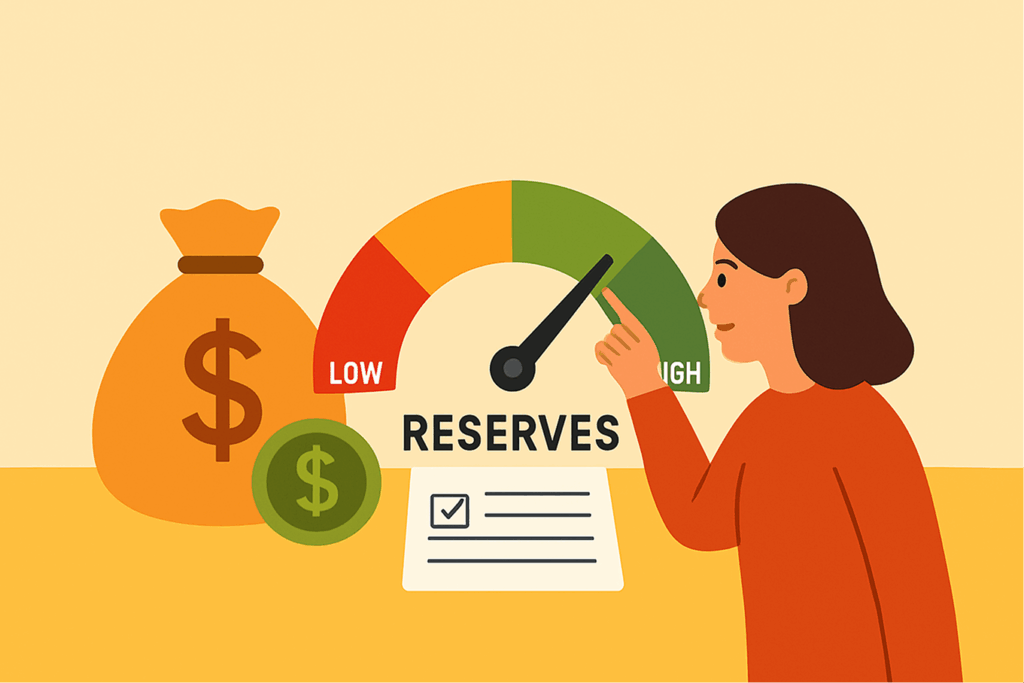
Association reserves are one of the strongest indicators of financial stability—and one of the most misunderstood. Many finance leaders worry their association reserves are too low, while others struggle to justify why reserves should be strengthened at all.
In a climate of rising operating costs, shifting membership revenue, and increased pressure for financial transparency, getting your reserve strategy right is no longer optional. It’s essential.
This guide breaks down how much an association should keep in reserves, how to build a reserve fund that supports long-term planning, and includes a free Reserve Policy Template you can adapt for your board.
TL;DR
- Association reserves are funds intentionally set aside to cover unexpected expenses, revenue gaps, and long-term obligations without disrupting operations.
- Reserves are a financial stability tool, they help associations handle emergencies, economic downturns, leadership transitions, or delayed revenue.
- Common reserve uses include cash-flow smoothing, unplanned repairs or costs, strategic investments, and protecting core programs during downturns.
- Many associations run into trouble not because they overspend, but because they lack a defined reserve policy that explains how much to save and when to use it.
- Best practice is to set a target reserve range, document board approval rules, and review reserves regularly as the organization grows or changes.
- Underfunded reserves can force reactive decisions like sudden dues increases, service cuts, or short-term borrowing.
- Well-managed reserves support long-term sustainability, better governance, and more confident decision-making by leadership.
What Are Association Reserves?
Association reserves—also known as reserve funds, nonprofit reserve funds, or a reserve account—are the unrestricted net assets set aside to stabilize an organization during uncertain times.
In simple terms:
Your association reserves = your financial safety net + strategic investment fund.
Reserves allow associations to:
- Withstand revenue dips
- Cover unbudgeted expenses
- Invest in long-term technology or staffing
- Maintain continuity through leadership transitions
- Support chapters in financial distress (for multi-chapter orgs)
How Much Should an Association Have in Reserves?
This is one of the most frequently asked questions from boards and finance committees—and it’s a primary search query: “how much can a nonprofit have in reserves?”
While every organization is different, most associations follow these benchmarks:
General Reserve Benchmark
3–12 months of operating expenses
(depends on revenue diversification and operational risk)
Best Practice Range for 501(c)(6) Associations
6–12 months of operating expenses
Higher Reserve Targets Are Appropriate When:
- Revenue is heavily event-dependent
- Chapters rely on national for support
- The association recently expanded programs
- There is a high degree of regulatory or industry volatility
Lower Reserve Targets May Be Acceptable When:
- Revenue is stable and predictable
- Chapters carry their own reserves
- The organization has strong liquidity and diversified income streams
Operating Reserves vs. Capital Reserves
Not all reserve dollars serve the same purpose. Strong financial stewardship requires clarity.
Operating Reserves
Funds used to sustain day-to-day operations during disruptions.
Capital Reserves
Also known as capital reserves for nonprofits, these funds are earmarked for long-term investments or major improvements—technology overhauls, infrastructure, or new system implementations.
Board-Designated Reserves
Flexible funds the board assigns for future strategic priorities.
Documenting each category in your nonprofit reserve policy template allows your board to understand what portion of reserves is truly available for emergencies.
Why Strong Association Reserves Matter
Healthy reserves create stability—but the financial benefits ripple further:
They Strengthen Your Board Relationships
Clear reserves reduce anxiety and prevent reactionary decision-making.
They Improve Audit and Compliance Readiness
Reserves demonstrate responsible stewardship and financial planning.
They Enable Strategic Investment
You can fund innovation without compromising operations.
They Protect Chapters
For multi-chapter organizations, reserves ensure continuity even when chapters face cash-flow issues.
How to Set the Right Reserve Level
Association finance leaders should use a structured, transparent formula to determine appropriate reserve targets.
Below is the 3-Part Framework used by high-performing associations:
1. Risk Assessment
Evaluate the degree of volatility in:
- Membership revenue
- Event revenue
- Sponsorship dependence
- Chapter support requirements
- Legislative or regulatory uncertainty
Higher risk = higher reserves.
2. Liquidity Needs
Analyze your:
- Monthly burn rate
- Cash conversion cycle
- Unrestricted net assets
- Access to lines of credit or emergency funding
Strong liquidity allows for lower minimum reserves.
3. Strategic Priorities
Reserves shouldn’t sit idle—they should support long-term goals, including:
- Technology upgrades
- New staff roles
- Chapter infrastructure
- Member experience improvements
- Advocacy efforts
Align reserve levels with your multi-year strategy, not just your budget.
How to Present Reserve Levels to the Board
Boards often struggle with the concept of “too much” or “too little.” Use these approaches:
- Present the reserve ratio (reserves ÷ annual expenses)
- Share peer benchmarks from similar associations
- Explain the risks that reserves are designed to mitigate
- Tie reserve levels to strategic goals—not fear-based messaging
- Provide a visual chart of reserve trends over 3–5 years
A clear narrative prevents unproductive debate and builds board confidence.
Introduce a Formal Reserve Policy
A reserve policy formalizes expectations around:
- Reserve targets
- When reserves can be used
- Who authorizes withdrawals
- How reserves are monitored
- How the reserve account is replenished
This is where your Reserve Policy Template becomes critical.
It removes ambiguity, supports audits, and creates confidence among staff, board members, and members.
Free Download: Reserve Policy Template
Get a board-ready, customizable Nonprofit Reserve Policy Template built specifically for associations.
Use it to define:
- Operating reserves
- Capital reserves
- Minimum thresholds
- Replenishment plans
- Approval processes
Get the Template
Conclusion: Strong Reserves = Long-Term Resilience
Healthy association reserves aren’t about hoarding cash—they’re about protecting the mission.
With the right strategy, a formal policy, and clear benchmarks, your association can:
- Navigate uncertainty confidently
- Fund innovation responsibly
- Strengthen board trust
- Support chapters effectively
- Advance member value year-round
A disciplined approach today ensures sustainability tomorrow.

Your questions, answered.
What are association reserves?
Association reserves—also known as reserve funds, nonprofit reserve funds, or a reserve account—are unrestricted net assets set aside to stabilize the organization during financial uncertainty. They protect operations during revenue dips, cover unplanned expenses, and support long-term strategic investments.
How much should an association have in reserves?
Most associations maintain 3–12 months of operating expenses in reserves.
For 501(c)(6) organizations, a best-practice reserve level is 6–12 months, depending on revenue stability, risk exposure, and strategic priorities.
How much can a nonprofit have in reserves without risking compliance issues?
There is no legal maximum for how much a nonprofit can have in reserves.
However, reserves should be aligned with organizational risk, liquidity needs, and your documented reserve policy. Excessively high reserves without a strategic purpose may lead to board concern or member pushback.
What is the difference between operating reserves and capital reserves?
Operating reserves support day-to-day operations during disruptions.
Capital reserves for nonprofits are used for major upgrades or long-term projects, such as technology infrastructure, building improvements, or new systems.
Many associations maintain both.
Why are strong association reserves important?
Healthy reserves improve financial stability, strengthen board confidence, support audit readiness, and allow associations to invest in strategic initiatives without jeopardizing operations. For multi-chapter organizations, they also ensure the national office can support chapters during cash-flow challenges.
When should an association use reserve funds?
Reserve funds may be used for:
- Unexpected revenue declines
- Cash flow disruptions
- Emergency expenses
Strategic investments approved by the board
They should not be used to fill recurring budget gaps.