For associations, staying compliant is not optional; it’s essential for protecting tax-exempt status, maintaining credibility with members, and avoiding costly penalties. But compliance isn’t simple. Between IRS Form 990 deadlines, state-level annual reports, lobbying disclosures, and employment filings, association leaders often feel like they’re juggling too many calendars at once.
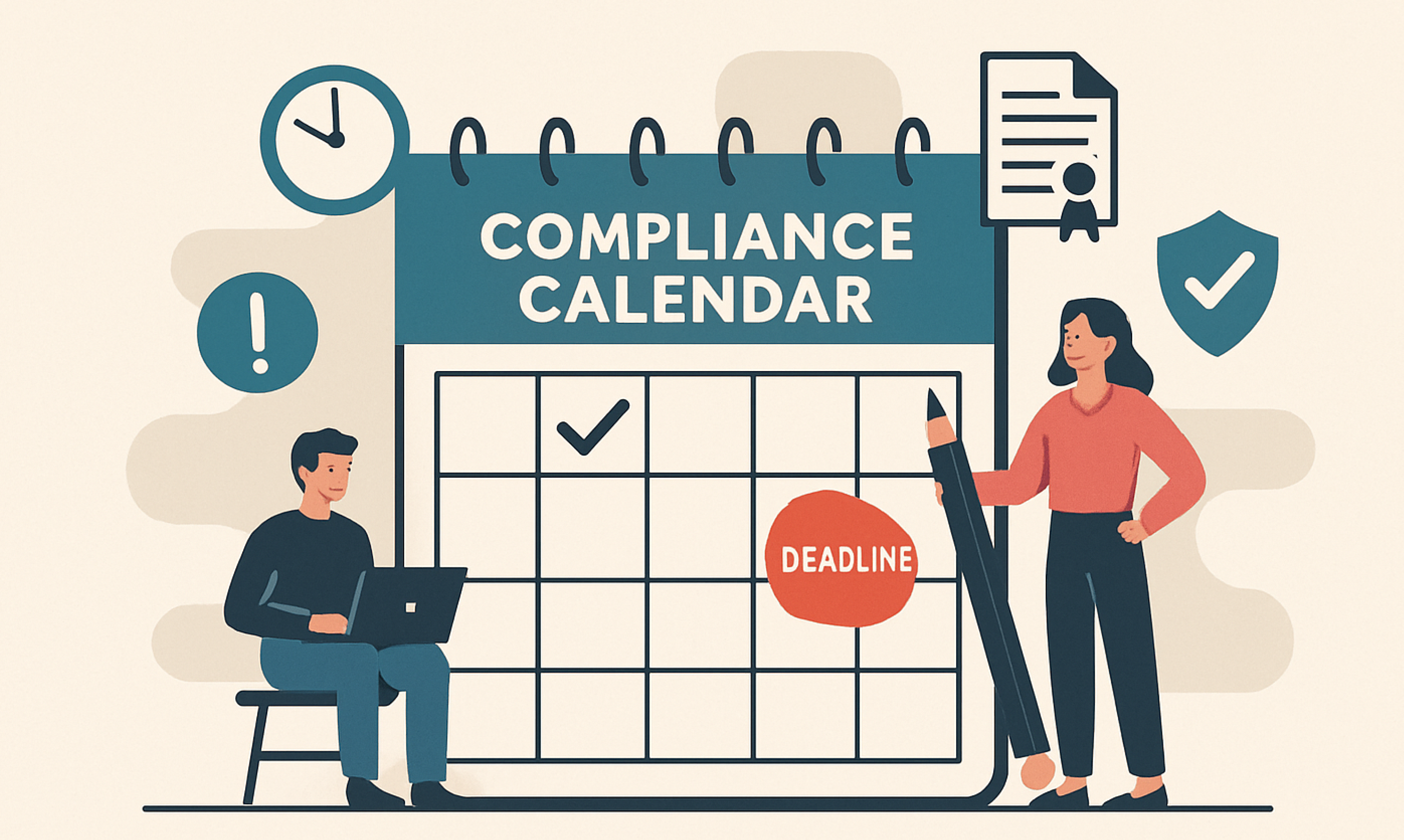
This association compliance calendar breaks down the key IRS deadlines and state filing requirements associations need to track, plus tools and tips to keep everything on schedule.
TL;DR
- An association compliance calendar is a structured schedule that tracks all legal, financial, and regulatory deadlines your organization must meet. This includes filings, reports, renewals, taxes, audits, and any required disclosures so nothing is missed.
- Maintaining a calendar helps prevent penalties, late fees, or lapses in good standing with governments and regulators. It turns chaotic tracking into reliable workflows that leadership and staff can follow.
- A strong compliance calendar lists due dates, responsible parties, required documents, and filing instructions. This clarity reduces confusion and spreads accountability across the team.
- Using reminders and automated alerts ensures important tasks aren’t overlooked. Associations avoid last-minute scrambling when deadlines approach.
- Keeping the compliance calendar updated and accessible improves planning, transparency, and audit readiness. It supports better governance and reduces risk.
Why a Compliance Calendar Matters
Associations face unique challenges:
- Decentralized structures: Chapters and affiliates may all file separately.
- Volunteer treasurers: Frequent turnover creates knowledge gaps.
- Multiple filings: IRS, state, and lobbying requirements pile up quickly.
- Risk of revocation: Miss three consecutive years of Form 990 filings and your association automatically loses tax-exempt status.
A compliance calendar ensures no deadlines slip through the cracks and gives boards visibility into financial and legal responsibilities.
Why Compliance Is a Board-Level Responsibility
For associations, compliance isn’t just an administrative task, it’s a governance duty. Boards are legally and ethically responsible for overseeing the organization’s financial integrity. Missing filings or mismanaging compliance exposes associations to:
- Regulatory risk: IRS penalties, loss of tax-exempt status, or state dissolution.
- Reputational risk: Members, sponsors, and partners lose trust if finances aren’t transparent.
- Operational risk: Late filings or revoked status disrupt contracts, funding, and advocacy efforts.
By keeping a clear compliance calendar, boards demonstrate fiduciary responsibility and build trust with members and stakeholders. Proactive compliance is not just about avoiding penalties—it’s about showing the association is well-managed, resilient, and worthy of investment.
Key IRS Deadlines for Associations
IRS Form 990 (Annual Return of Organization Exempt From Income Tax)
- Due Date: The 15th day of the 5th month after the end of your fiscal year.
- For calendar-year filers: May 15.
- Options:
- Form 990-N (e-postcard) – for gross receipts ≤ $50,000.
- Form 990-EZ – for gross receipts < $200,000 and total assets < $500,000.
- Form 990 (full) – for larger associations.
Tip: Extensions are available (Form 8868), but interest and penalties may still apply for late tax owed.
IRS Form 941 (Quarterly Employment Tax Return)
- Due Dates: April 30, July 31, October 31, January 31.
- Required if your association has employees.
Lobbying Disclosures (Schedule C of Form 990)
- Trade and professional societies often engage in advocacy. Reporting lobbying expenditures accurately is critical to IRS compliance.
State Filing Deadlines for Associations
Each state has its own rules for incorporated nonprofits and trade associations. Common filings include:
- Annual Reports: Filed with the Secretary of State to maintain good standing. Usually due by the anniversary of incorporation or a set calendar date.
- State Charitable Registrations: Required if your association solicits contributions across state lines. Renewals often fall 4–12 months after the end of your fiscal year.
- Franchise Taxes or Business Reports: In states like Delaware, nonprofits may still have to file franchise tax reports even if exempt.
Risks of Missing Deadlines
- Automatic Revocation: 3 missed 990 filings = loss of tax-exempt status.
- Penalties: Late 990 filings can incur $20/day fines up to $10,000 (for smaller orgs) or $100/day for larger associations.
- State Dissolution: Missing annual reports can cause your entity to lose “good standing,” limiting contracts and legal protections.
- Reputation Damage: Members and sponsors expect professional financial stewardship. Compliance gaps erode trust.
How to Stay on Track
- Build a Compliance Calendar: Centralize IRS and state deadlines, and assign accountability.
- Automate Reminders: Use project management or compliance software to notify staff and volunteer treasurers.
- Consolidate Finances: Associations with multiple chapters should consider consolidating EINs to reduce the number of filings.
- Leverage AI & Automation: Tools like Crowded provide compliance alerts, AI-powered reconciliation, and audit-ready records to simplify filings.
Crowded: Compliance Made Easier for Associations
Crowded was built for associations juggling compliance and reporting challenges. With features like:
AI-assisted 990 tracking: Smart alerts for late or missing filings.
Year-over-year 990 comparisons with Solly AI: Spot changes across prior filings, track trends, and clarify discrepancies instantly.
Conversational compliance support: Solly answers board and staff questions about filings, benchmarks, and IRS requirements in plain language.
Audit-ready reconciliation: Automatically categorized expenses, receipts, and dues for clean documentation.
Board-ready reporting: Exportable dashboards that connect compliance with governance.
Instead of relying on volunteers to manually track due dates and regulations, Crowded embeds compliance into daily financial workflows—helping associations stay in good standing without the stress.
Key Takeaway
A missed compliance deadline can cost your association money, credibility, and even its tax-exempt status. By maintaining a clear compliance calendar and leveraging tools designed for associations, leaders can shift their focus back to what matters most: delivering value to members.
Your questions, answered.
When is Form 990 due for associations?
Form 990 is due on the 15th day of the 5th month after your fiscal year ends. For most associations on a calendar year, the deadline is May 15. Extensions are available using Form 8868, but interest and penalties may still apply.
What happens if an association misses the Form 990 deadline?
Missing the deadline can result in IRS penalties of $20–$100 per day, depending on your revenue size. More importantly, missing three consecutive years triggers automatic revocation of tax-exempt status.
Do all associations have to file at the state level too?
Yes, most trade and professional societies must also file annual reports with their Secretary of State to maintain good standing. Some states also require charitable registration renewals or franchise tax reports.
How do associations track multiple chapter filings?
Associations with many chapters often struggle with decentralized compliance. Best practices include using a consolidated compliance calendar, assigning accountability, or restructuring under a single EIN to reduce filings.
Can AI help with compliance deadlines?
Yes. Platforms like Crowded use AI to track Form 990 filings, flag missing or late reports, and provide automated reminders—helping associations stay compliant without relying solely on manual tracking.