Compliance

Read our compliance blogs for guidance on staying compliant with IRS guidelines for nonprofits and how to maintain tax-exempt status

Form 990 Schedule A determines whether your nonprofit keeps its public charity status, and for multi-chapter organizations, the risk is often hidden in the revenue mix. This guide breaks down the public support test and how to manage it before filing season.

Most CPAs treat the Form 990 as a compliance deliverable, but it's actually the earliest warning system you have for nonprofit clients at financial risk. Learn the four 990 data signals that predict distress before a crisis hits, and the workflow to act on them.

The IRS audited over 3,000 nonprofits in 2024 — and large organizations are the most exposed. Learn which audit triggers for IRS examination are most common and how to eliminate them before they become a problem.

KYC obligations fail because nonprofit leadership changes faster than KYC systems can keep up. Here’s how AMS vendors and nonprofit SaaS platforms can close the gap and maintain audit-ready compliance without rebuilding their infrastructure. 

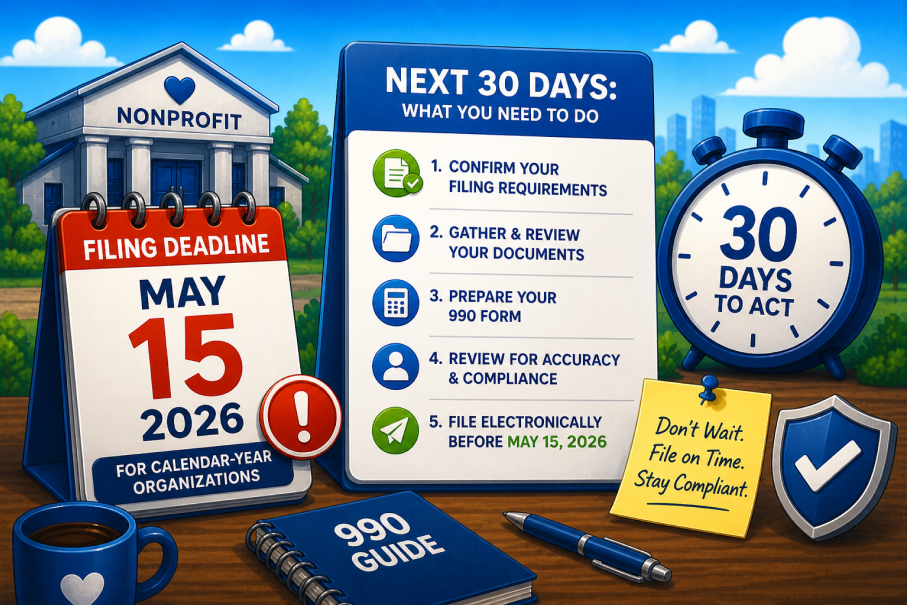
The nonprofit filing deadline, May 15, 2026, applies to every 501(c)(3) and 501(c)(6) calendar-year organization, and missing it without an extension triggers daily IRS penalties and puts your tax-exempt status at risk. Get the 30-day action checklist, Form 8868 filing steps, and the operational move that turns May 15 from an annual crisis into a routine review.

Learn how to open a nonprofit bank account with a step-by-step guide to the documents, approvals, EIN requirements, signers, and verification you'll need. 

When a small chapter has one big fundraiser, the IRS takes notice, even if your fund accounting software doesn't. Learn how the $50K gross receipts threshold creates hidden compliance risk across chapter networks, and what it takes to close the visibility gap before year-end.

Every association needs a nonprofit EIN before it can open a bank account, collect dues, or file taxes, but for multi-chapter and organizations, the structure of that EIN can make or break your compliance. This guide covers IRS approval, chapter EIN strategy, and what associations need to get right from the start.

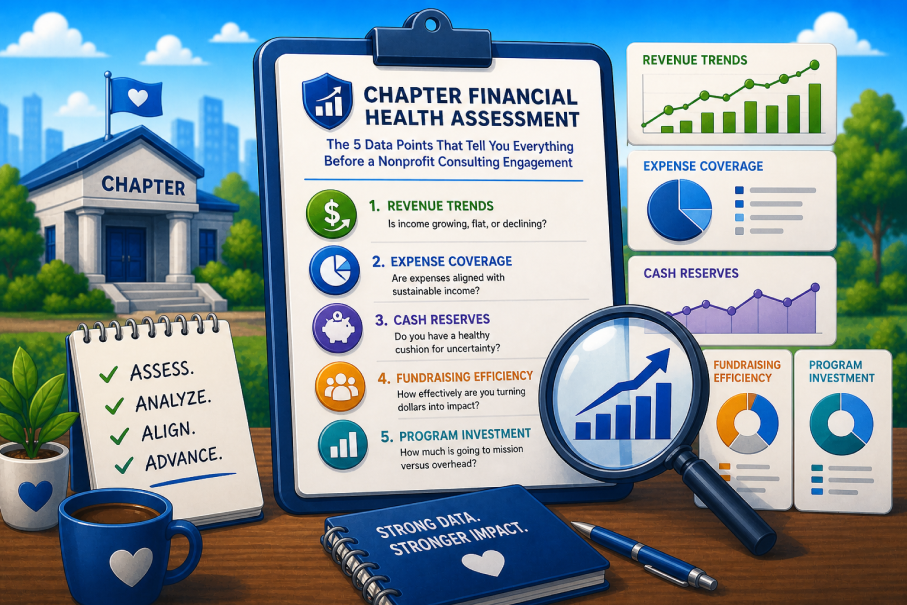
A nonprofit chapter financial health assessment reveals the five signals that determine whether you’re walking into a stable engagement or a financial risk. Learn how reserves, dues lag, 990 filings, account control, and fund tracking shape scope, pricing, and outcomes.

Group exemptions depend on active headquarters supervision. When HQ can’t clearly see chapter activity, filing status, or leadership changes, compliance gaps can quietly put the entire exemption at risk. This guide explains what effective group supervision looks like in practice, why visibility across chapters is essential, and how organizations can build reliable oversight that protects their exemption long term.