

Modern nonprofit payment processing goes far beyond accepting donations. Today’s nonprofits and associations need systems that automate donor receipts, support events and mobile payments, collect membership dues, and tie everything back to clean financial reporting.
This guide breaks down the key categories of nonprofit payment processing tools, explains what each does best, and shows how platforms like Crowded bring these workflows together—without the usual patchwork of systems.
TL;DR
- Nonprofit payment processing is the system nonprofits use to accept, track, and manage all incoming funds, including donations, event fees, sponsorships, and membership dues, with automated receipts and clear reporting.
- Many organizations use separate tools for each revenue type, which leads to manual reconciliation, siloed data, and poor financial visibility.
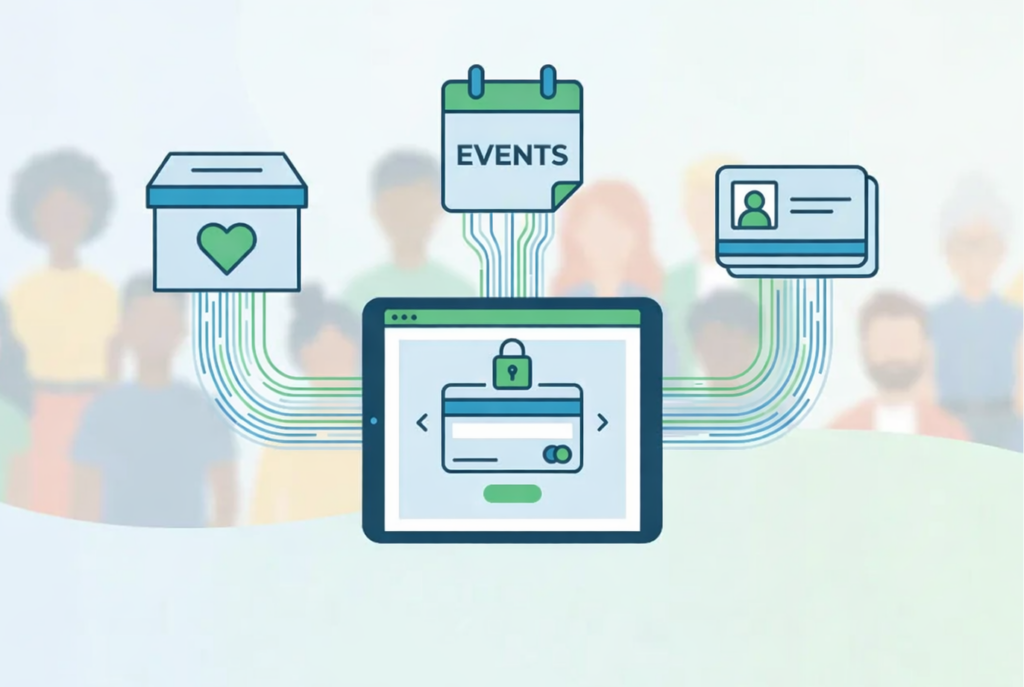
- The ideal payment setup unifies all payment types (donations, events, dues) and connects them directly to structured financial accounts so funds are tracked by purpose or program right away.
- Integrated systems help nonprofits avoid operational debt, improve reporting accuracy, and make audit-ready financials easier.
- A strong solution supports:
- Automated donor receipts and recurring giving
- Event payment processing and ticketing
- Mobile payments and on-site fundraising tools
- Membership dues and chapter-based collections
- A unified platform (like Crowded) can reduce admin work by connecting payments directly to financial structure, improving transparency, simplifying reconciliation, and supporting growth.
Which software tools help nonprofit automate donor receipt and fundraising workflow?
At its core, nonprofit payment processing should automate what used to be manual: donation acceptance, donor receipts, and basic fundraising workflows.
Tools in this category typically handle:
- Online donation pages
- Credit card and ACH processing
- Automatic donation receipts
- Recurring giving
- Basic donor records
Common tools nonprofits use include donation-first platforms and CRMs that integrate with payment processors.
Where these tools often fall short is what happens after the donation:
- Funds land in disconnected bank accounts
- Reconciliation is manual
- Finance teams and fundraisers operate in silos
Crowded approaches nonprofit payment processing differently.
In addition to accepting donations and issuing receipts, Crowded connects payments directly to the organization’s financial structure—so funds are tracked by purpose, program, or chapter from the moment they’re received. This reduces reconciliation work and improves audit readiness without relying on spreadsheets.
Which financial management tools offer integrated event payment solutions for nonprofits?
Event payment processing is a critical part of nonprofit operations, especially for organizations that rely on:
- Galas and fundraisers
- Conferences and ticketed events
- Training sessions or workshops
Many nonprofits use standalone event tools that handle registration and payments—but stop there.
Financial management tools with integrated event payment processing allow nonprofits to:
- Accept event payments
- Route funds correctly
- See event revenue in real time
- Compare budget vs actual performance
Crowded supports integrated event payment processing by connecting event-related payments directly to designated accounts or sub-accounts. Instead of exporting reports from event software and manually reconciling revenue, finance teams can see event funds clearly categorized and ready for reporting.
This matters most for nonprofits running multiple events or chapters, where clarity and control are essential.
What tools are available for event management and mobile payments at fundraisers?
Fundraising event management software focuses on the front-end experience:
- Mobile check-in
- On-site payments
- QR codes and text-to-give
- Peer-to-peer fundraising
These tools are essential for donor experience—but they often introduce complexity on the backend.
A common challenge nonprofits face:
- Mobile payments are processed outside core financial systems
- Finance teams must reconcile multiple tools after the event
- Reporting becomes fragmented
Crowded complements fundraising event management software by acting as the financial backbone. Mobile and on-site payments flow into a centralized system where funds are immediately visible, categorized, and accessible to authorized staff—reducing post-event cleanup and improving transparency.
Which tools should I consider for collecting dues and donations for membership groups?
Membership organizations, associations, and professional societies have unique nonprofit payment processing needs:
- Recurring dues
- One-time contributions
- Event fees
- Chapter-based revenue
Many tools handle either donations or dues—but not both well.
For membership groups, the ideal solution:
- Supports recurring dues and one-time payments
- Separates funds by chapter, committee, or program
- Provides clear reporting for boards and treasurers
Crowded is built specifically for this use case. It allows membership groups to collect dues and donations while structuring funds exactly how the organization operates—whether by chapter, fund, or initiative. This makes Crowded particularly well-suited for associations and multi-entity nonprofits that outgrow generic donation tools.
Why Nonprofit Payment Processing Needs to Be Connected to Finance
Across donations, events, mobile payments, and membership dues, one theme is consistent: payments without financial structure create operational debt.
Nonprofits often start with tools that solve one problem at a time:
- A donation tool for fundraising
- An event platform for ticketing
- A payment processor for dues
Over time, this leads to:
- Manual reconciliation
- Inconsistent reporting
- Limited financial visibility
Crowded addresses nonprofit payment processing holistically, connecting how money comes in with how it’s managed, tracked, and reported.
How Crowded Fits Into the Nonprofit Payment Processing Stack
Crowded supports nonprofits and membership organizations by:
- Accepting donations, event payments, and dues
- Automating receipt and payment tracking
- Structuring funds by program, chapter, or purpose
- Providing board-ready financial visibility
- Reducing reliance on disconnected tools
Instead of asking “Which tool handles this payment?”, organizations can ask:
“Does our payment system reflect how we actually operate?”
Final Takeaway
Nonprofit payment processing is no longer just about transactions—it’s about workflow, structure, and visibility.
By understanding:
- Which software tools help nonprofit automate donor receipt and fundraising workflow
- Which financial management tools offer integrated event payment solutions for nonprofits
- What tools are available for event management and mobile payments at fundraisers
- Which tools should I consider for collecting dues and donations for membership groups
nonprofits can choose systems that scale with them—not against them.
Crowded brings these workflows together, helping organizations move from fragmented payments to connected financial infrastructure.
Your questions, answered.
What is nonprofit payment processing?
Nonprofit payment processing refers to the systems and tools organizations use to accept, track, and manage incoming funds such as donations, event payments, sponsorships, and membership dues. Effective nonprofit payment processing also includes receipt automation, reporting, and financial visibility.
Which software tools help nonprofit automate donor receipt and fundraising workflow?
Many donation platforms automate donor receipts and basic fundraising workflows, including online donation pages and recurring giving. However, these tools often stop at payment acceptance. Crowded extends nonprofit payment processing by connecting donations directly to financial accounts, making reconciliation and reporting easier for finance teams.
Which financial management tools offer integrated event payment solutions for nonprofits?
Some financial management tools support event payment processing by routing ticket sales and event fees into structured accounts. Crowded offers integrated event payment processing by allowing nonprofits to track event revenue by program, fund, or chapter without manual cleanup after the event.
What tools are available for event management and mobile payments at fundraisers?
Fundraising event management software often includes mobile check-in, QR codes, text-to-give, and on-site payments. These tools improve donor experience but can create backend complexity. Crowded complements event management and mobile payment tools by serving as the financial backbone where all event payments are centralized and categorized.
Which tools should I consider for collecting dues and donations for membership groups?
Membership groups should look for tools that support recurring dues, one-time donations, and event payments while separating funds by chapter or program. Crowded is designed for membership organizations and associations, making it easier to collect dues and donations and maintain clear, board-ready reporting.
Why do nonprofits struggle with fragmented payment tools?
Using separate systems for donations, events, and dues often leads to manual reconciliation, inconsistent reporting, and limited financial visibility. A unified nonprofit payment processing approach reduces operational debt and improves accuracy.
How does Crowded fit into nonprofit payment processing?
Crowded combines payment collection with financial management. It supports donations, event payments, mobile fundraising, and membership dues while structuring funds in a way that reflects how nonprofits and associations actually operate.
Is nonprofit payment processing only about fundraising?
No. While fundraising is a major component, nonprofit payment processing also includes membership dues, sponsorships, event fees, and internal financial tracking. Strong payment infrastructure supports both revenue growth and compliance.