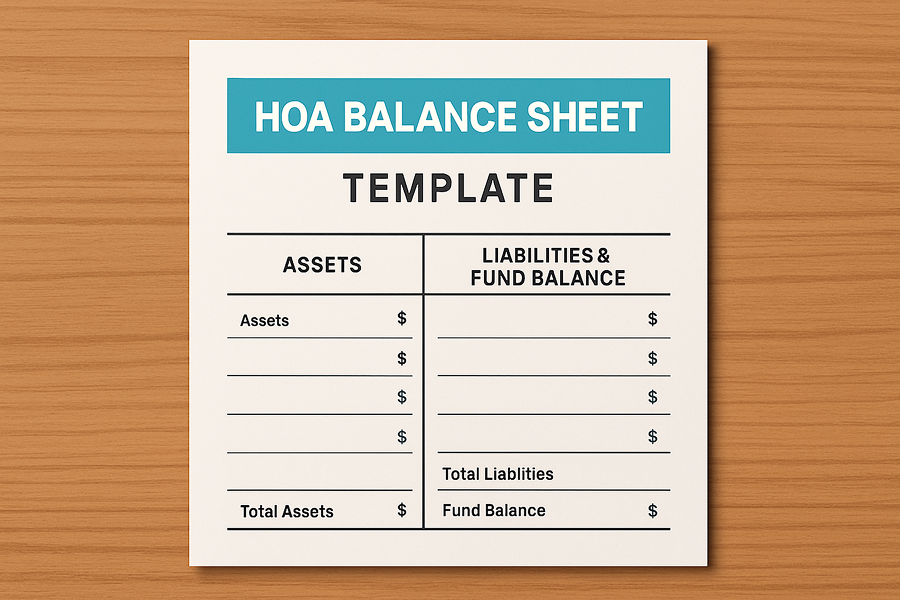
Managing HOA finances isn’t just about collecting dues. It’s about clarity, accountability, and long-term sustainability. A structured HOA balance sheet gives your board and residents a clear snapshot of the community’s financial standing—from cash on hand to upcoming liabilities.
Using a HOA balance sheet template simplifies the reporting process—especially when your financial data is organized and transparent. Crowded provides visibility into every transaction, helping your board streamline balance sheet creation with confidence and accuracy.
TL;DR
- A HOA balance sheet template provides a ready-made financial snapshot showing an association’s assets, liabilities, and equity at a given point in time.
- It gives boards and managers a clear view of financial health without building the report from scratch.
- The template separates and organizes core categories like cash, receivables, reserves, payables, and long-term obligations so nothing gets overlooked. This consistency improves accuracy and makes comparisons across periods easier.
- Using the template helps leaders spot trends, understand reserve adequacy, and monitor short-term obligations versus long-term sustainability. It also supports budgeting, audit readiness, and transparent reporting to members.
- Standardized balance sheets make financial reviews more efficient and reliable. They reduce confusion that comes from ad-hoc or inconsistent reporting formats.
- A good template integrates with bookkeeping and accounting software for smoother reconciliation and year-end close processes. This saves time and improves trust in the numbers presented to stakeholders.
HOA Balance Sheet Template Explained: What It Is and Why It Matters
What Is an HOA Balance Sheet?
A Homeowners Association (HOA) balance sheet is a financial statement that shows the community’s financial position at a specific point in time. It includes:
- Assets – What your HOA owns or is owed
- Liabilities – What your HOA owes
- Fund Balances (Equity) – What’s left over (reserves + retained earnings)
This format ensures transparency and accountability for HOA members and helps the board make informed decisions.
What to Include in a Template for HOA Balance Sheets
A high-quality HOA balance sheet template should be broken into three main sections:
1. Assets
Track what the HOA owns or expects to collect:
- Operating cash
- Reserve funds
- Prepaid expenses
- Assessments receivable
2. Liabilities
Capture what the HOA owes:
- Accounts payable
- Deferred income
- Loans
- Prepaid assessments
3. Fund Balances
Display available funds, including:
- Operating fund balance
- Reserve fund balance
- Restricted/special project funds
Pro Tip: Crowded gives your board clear visibility into every transaction, making it easier to compile accurate, up-to-date financial reports.
An Easier Way to Collect and Track HOA Dues With Crowded
Many HOA platforms offer dues payment tools—but they often come with steep fees and clunky processes.
Crowded changes that. It’s a modern, 100% digital dues collection platform made specifically for HOAs.
- Create unlimited, secure payment links in minutes
- No app required—just click and pay
- Track who paid and send reminders automatically
- Use links for dues, assessments, or community events like block parties
Only 2.99% processing fee—you decide if the HOA or resident absorbs it.
Where Does the Money Go?
All collected funds go into an FDIC insurance-eligible Crowded account, where your board can:
- Pay vendors and contractors
- Assign debit cards to board members
- Track spending with full transparency
No minimum balances
Free to open
Built for HOA compliance and control
Download a Free HOA Balance Sheet Template
Don’t want to build one from scratch? Download our free HOA Balance Sheet Template. And while the template gives you the structure, Crowded gives you the clarity. With every transaction categorized and visible in real time, compiling your balance sheet becomes far less manual—and far more accurate.
Get the HOA Balance Sheet
Your questions, answered.
What’s the difference between an HOA balance sheet and an income statement?
A balance sheet shows a financial snapshot at a point in time. An income statement shows performance over a period. Both are critical, but the balance sheet gives a clearer view of reserves and obligations.
How often should an HOA balance sheet be updated?
At least quarterly. Crowded ensures your financial records are always organized and transparent, so building or updating your balance sheet is easier.
Can we use accounting software for HOA balance sheets?
Yes—but many platforms aren’t built for HOAs.
Do self-managed HOAs need a balance sheet?
Absolutely. Even small or volunteer-led HOAs need visibility, budgeting oversight, and resident accountability.
Is Crowded only for dues collection?
No—it’s an all-in-one platform for collecting, banking, tracking, and managing HOA funds, with real-time transparency into every dollar.